

Ever wondered why you seem to struggle with persistent heel pain, while your running buddy never suffers a single ache? The answer might literally be right under your feet.
Every foot is unique, and the shape of your arch directly dictates how your lower body absorbs shock and distributes weight. When your foot structure creates biomechanical stress, it can predispose you to specific injuries.
Here is a breakdown of the three primary foot types, the unique risks associated with each, and how targeted podiatry care can keep you moving pain-free.
1. Flat Feet (Pes Planus / Low Arch / Overpronation)
What It Looks Like
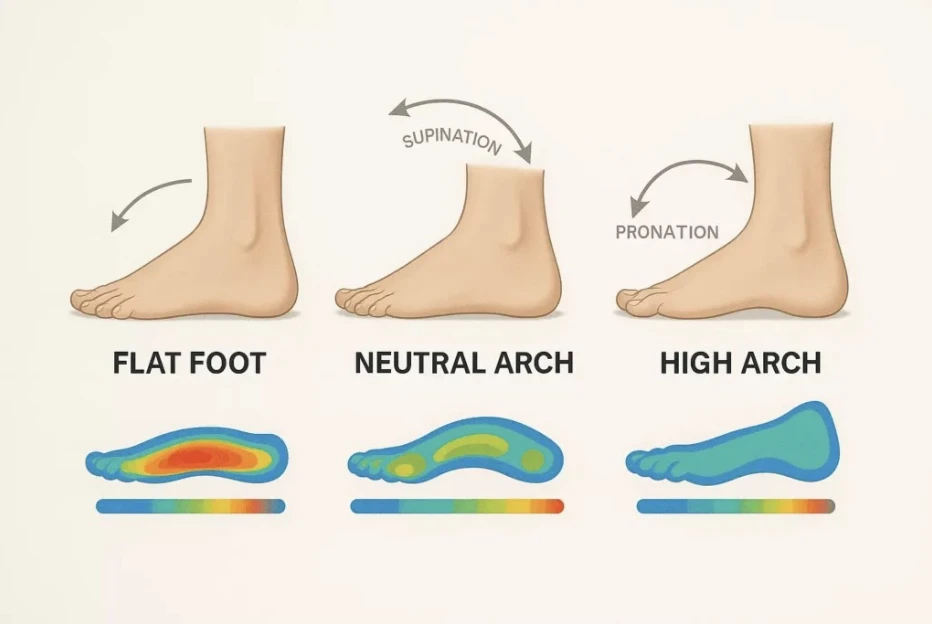
When standing, the entire sole of the foot or a very low, flexible arch touches the ground. As you walk or run, the foot tends to roll inward excessively (overpronation).
Common Injury Risks
Because a flat foot lacks a rigid arch structure to support your weight, the surrounding muscles and tendons have to work overtime to keep you stable. This structural pattern frequently leads to:
- Plantar Fasciitis: Excessive strain on the thick band of tissue running along the bottom of your foot.
- Shin Splints: Increased stress on the lower leg muscles pulling against the shinbone.
- Muscle Fatigue: General aching in the feet and calves due to overworking structural muscles.
2. Neutral Foot (Normal Arch)
What It Looks Like
A neutral foot features a standard, well defined arch. Upon landing, the foot rolls slightly inward to absorb shock, distributing your body weight evenly across the entire surface of the foot.
Common Injury Risks
Biomechanically speaking, this is the most efficient foot type. It offers a balanced combination of shock absorption and rigid stability. While you have a lower baseline risk of structural injuries, issues can still arise if you wear worn out shoes or rapidly increase your training intensity.
3. High Arch (Pes Cavus / Supination)
What It Looks Like
The arch sits noticeably high off the ground, even when bearing full weight. As you move, the foot tends to roll outward (supination), placing intense pressure on the heel and the ball of the foot.
Common Injury Risks
High arched feet are naturally rigid and struggle to absorb impact effectively. Because force isn’t distributed evenly across the middle of the foot, the impact travels straight up the skeletal system, leading to:
- Stress Fractures: Increased impact forces absorbed directly by the bones of the foot and lower leg.
- Ankle Instability: Frequent rolling or spraining of the ankle due to the foot’s outward tilt.
- Joint and Lower Back Stress: Lack of natural shock absorption placing extra force on knees, hips, and the lower spine.
How a Podiatrist Can Help
If you aren’t sure which category you fall into, or if you are already dealing with lower limb discomfort, the best step you can take is to book a Comprehensive Biomechanical Assessment with your local podiatrist.
During an assessment, a podiatrist will look far beyond just your arch height. They will analyse:
- Your natural joint range of motion
- Muscular strength and endurance
- Gait mechanics and pressure distribution
- Specific pain points and soft tissue inflammation
Tailored Treatment Options
Once your specific foot function is mapped out, your podiatrist will create a customised treatment plan tailored to your lifestyle. Interventions may include:
- Custom Foot Orthotics: Precision engineered shoe inserts designed to redistribute pressure or support low arches.
- Targeted Exercise Plans: Specific stretches and strengthening exercises to correct muscular imbalances.
- Footwear Recommendations: Guidance on choosing shoes with the right amount of cushioning or motion control for your foot shape.
- Laser Therapy: Advanced non-invasive treatment to accelerate tissue healing and calm inflammation.
- Load Management: Adjustments to your training frequency, intensity, or daily activity levels to allow injuries to heal.
Don’t Let Foot Pain Hold You Back
Your feet are the foundation of your entire body. Ignoring small aches today can lead to chronic foot, knee, hip, or back issues down the road. If you are concerned about how your feet function, or if ongoing pain is keeping you from the activities you love, reach out to your local podiatry clinic today to get back on track!