
When foot, ankle, or knee pain strikes it is easy to assume the issue is isolated to where it hurts. However, the human body functions as an interconnected kinetic chain. A restriction in the ankle can overload the knee and an asymmetry at the hip can cause persistent pain in the arch of the foot.
This is where a biomechanical assessment comes in. Rather than merely treating surface symptoms, a biomechanical assessment investigates how your bones, joints, muscles, and connective tissues function together when you stand, walk, and run.
What Is a Biomechanical Assessment?
A podiatric biomechanical assessment is a structured, comprehensive clinical evaluation of the movement, structural alignment, and mechanics of your lower limbs focusing specifically on the feet, ankles, knees and hips.
By analysing how these structures interact under load, a podiatrist can pinpoint the root cause of chronic pain, identify underlying inefficiencies, and prevent recurrent overuse injuries.
What Happens During an Assessment?
A comprehensive biomechanical assessment consists of five core stages designed to build an accurate picture of your lower limb function:
1. Detailed Clinical History
Every assessment begins with an in depth consultation. Your podiatrist will explore:
- Symptom history & pain timeline: When the pain started, what aggravates it and what provides relief.
- Activity & training routines: Your exercise frequency, surfaces, volume and performance goals.
- Medical background: Previous surgeries, fractures, joint conditions or systemic illnesses.
- Daily footwear habits: What you wear for work, leisure and sport.
This conversation helps establish clear diagnostic clues and highlights baseline risk factors before physical testing begins.
2. Static Physical Examination
Next, your podiatrist examines your joints and soft tissues while you are seated or lying on the examination table (non-weight bearing). This stage evaluates:
- Joint range of motion: Measuring flexibility and stiffness across the ankle, subtalar, midtarsal and big toe joints.
- Muscle strength & capacity: Testing key muscle groups (such as the calves, tibialis posterior, quads, and gluteals) for weaknesses or imbalances.
- Anatomical alignment & limb length: Checking for functional or structural leg length discrepancies and pelvic tilt.
- Palpation: Identifying tender structures, trigger points or inflamed tendons.
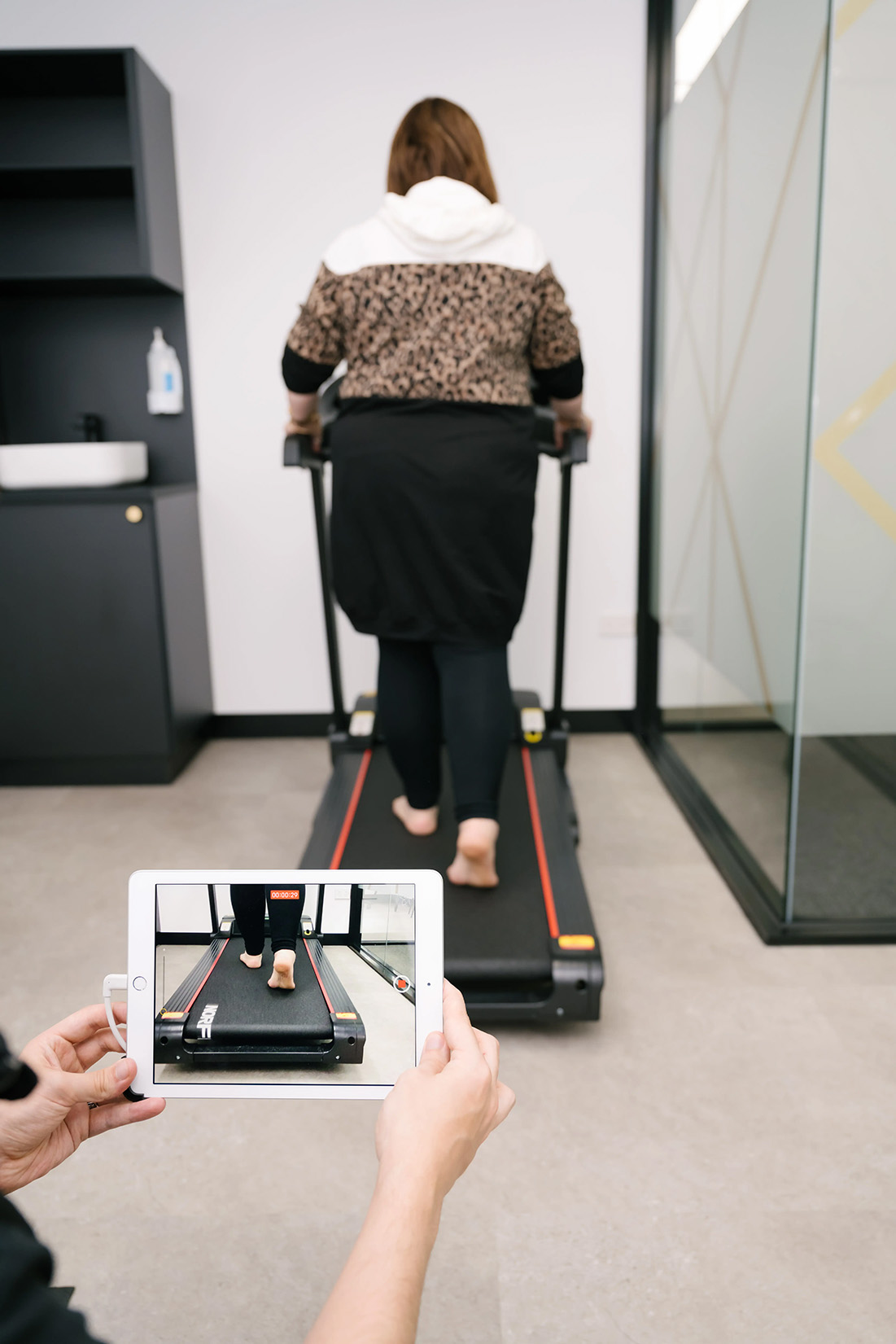
3. Dynamic Gait Analysis
Static tests show what your body can do; dynamic analysis shows what it actually does under load.
During dynamic testing your podiatrist evaluates you standing, walking and if relevant to your lifestyle or sport/running. This allows the clinician to observe:
- Heel strike, midfoot stance and propulsion phases.
- Degree and timing of pronation (inward rolling) or supination (outward rolling).
- Knee tracking, hip drop and pelvic stability during movement.
4. Footwear Audit
Your shoes are an extension of your biomechanics. Podiatrists typically ask patients to bring their three most frequently worn pairs of shoes (e.g., daily work shoes, running/gym shoes and casual everyday footwear).
Wear patterns on the outsoles, internal heel counter breakdown, and upper shoe creasing provide objective evidence of where your feet place the most pressure over time.
5. Tailored Treatment Plan
Once all data is gathered, your podiatrist synthesises the findings to explain the mechanical factors driving your discomfort. From there, an individualised management plan is developed to align with your lifestyle and goals. Depending on your needs, this may include:
- Custom or semi-custom foot orthotics.
- Targeted strengthening and mobility exercise programs.
- Footwear recommendations suited to your foot type and activity.
- Load management advice and training modifications.
- Complementary therapies such as shockwave, laser therapy or soft tissue mobilisation.
Who Can Benefit from a Biomechanical Assessment?
You do not need to be an elite athlete or experiencing severe pain to benefit from an evaluation. A biomechanical assessment is valuable if you:
- Experience recurring pain in your heels, arches, shins, achilles tendons, knees or hips.
- Suffer from conditions such as plantar fasciitis, bunions or recurrent ankle sprains.
- Notice uneven wear on the soles of your shoes.
- Are starting a new sport, running program or high step count job and want to prevent injury.
- Simply want to optimise movement efficiency and maintain long-term joint health.
Protect Your Long-Term Mobility
Discomfort in your feet or legs is rarely random; it is almost always your body signaling that a structure is absorbing more mechanical stress than it can tolerate. Addressing mechanical inefficiencies early helps prevent minor niggles from evolving into chronic, lifestyle limiting conditions.
If you are dealing with unexplained pain or want to understand how your lower limbs move, schedule a biomechanical assessment with your local podiatrist to keep your movement strong, balanced and pain-free.