
Diabetes is a complex, systemic condition that affects the entire body. When blood sugar levels remain high for prolonged periods, it can lead to complications that significantly impact your quality of life. At Holistic Foot Clinic, we believe that understanding the “how” and “why” of diabetes is the first step toward effective management and staying on your feet.
Understanding the Three Main Types
Diabetes isn’t a “one size fits all” diagnosis. It generally falls into three categories:
- Type 1 (approx. 10% of cases): An autoimmune condition where the pancreas produces little to no insulin. It is typically diagnosed in children or adolescents.
- Type 2 (approx. 85% of cases): Occurs when the body becomes resistant to insulin or cannot produce enough. This is closely linked to lifestyle factors but also has a strong genetic component.
- Gestational Diabetes: High blood sugar that develops during the second half of pregnancy. While it usually resolves after birth, it requires careful monitoring for the safety of both mother and baby.
How is Diabetes Detected?
1. In General Medicine (Your GP)
Your GP uses blood tests to see how your body processes glucose over time. Common tests include:
- HbA1c Test: Measures your average blood sugar over the last 3 months. A result of 6.5% or higher indicates diabetes.
- Fasting Plasma Glucose (FPG): Taken after an 8-hour fast; 7.0 mmol/L or higher indicates diabetes.
- Oral Glucose Tolerance Test (OGTT): Measures your body’s response to a sugary drink.
- Random Blood Glucose Test: A quick check where 11.1 mmol/L or higher suggests diabetes.
2. In Podiatry (Your Foot Specialist)
While a GP looks at the blood, a Podiatrist looks at the damage high sugar levels cause to your “protective mechanisms.” We perform a Comprehensive Diabetes Foot Assessment annually (or bi-annually) to check the following:
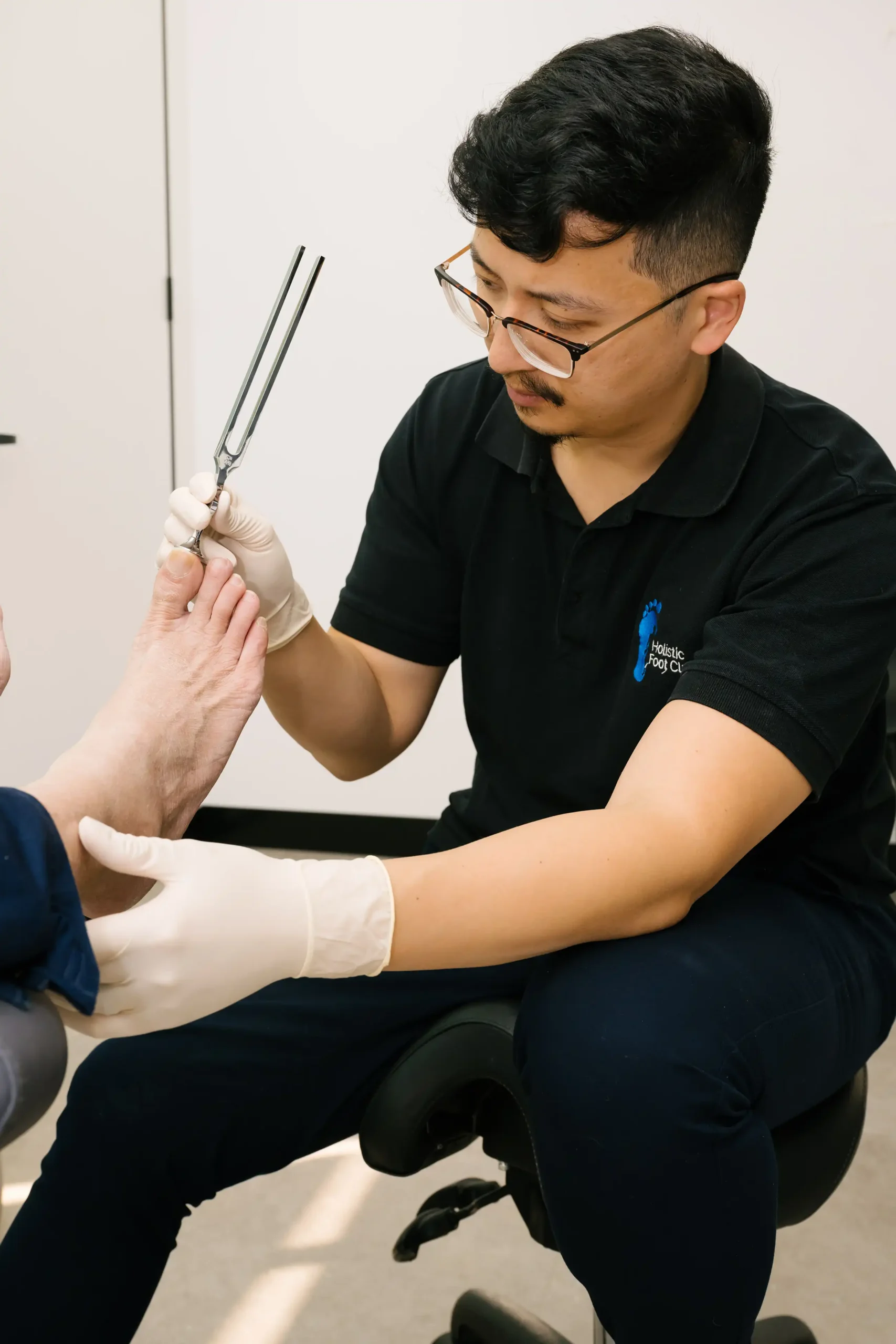
- Neurological Exam (Nerves): We use a 10g monofilament (a small, flexible tool) and a 128hz tuning fork to see if you can still feel light touch, pressure, and vibration. Loss of sensation means you might not feel a stone in your shoe or a blister forming.
- Vascular Exam (Blood Flow): We check the pulses in your feet and may use a Doppler ultrasound to listen to the blood flow. Gold standard includes an Absolute Toe Pressure. Good circulation is essential for healing cuts or sores.
- Dermatological & Structural Exam: We look for dry skin, corns, calluses, or deformities like bunions. These “minor” issues can quickly turn into dangerous ulcers if not managed.
- Biomechanics & Gait Analysis: We watch how you walk to identify any “high-pressure” spots that are at risk of breaking down.
Why the Urgency? The Risk of Complications
If blood sugar levels remain uncontrolled, diabetes can lead to several “co-morbidities.” These include heart disease, kidney disease, vision loss (retinopathy), and loss of sensation (neuropathy) and more.
Perhaps the most confronting complication is amputation. The statistics in Australia are a wake up call:
- 4,400+ amputations occur annually due to diabetes.
- Regional Risk: Those in remote or regional areas are up to 11 times more likely to undergo a limb amputation.
- Recurrence: Studies indicate re-amputation rates of approximately 20% within 1 year, 30% within 3 years, and over 45% within 5 years.
- Life Expectancy: Foot complications are the second leading cause of diabetes-related death. The 5-year mortality rate after an amputation can be as high as 80%.
Your Management Team: You Are Not Alone
The good news? Much of this damage can be slowed or prevented with the right team. If you are diagnosed with diabetes, your GP can provide a Chronic Disease Management Plan. This allows you to access allied health professionals with a Medicare Rebate, including:
- Endocrinologists, Diabetes Educators & Nutritionists (to manage sugar levels).
- Ophthalmologists (to protect your vision).
- Podiatrists (to protect your mobility).
Take the Proactive Step
Whether you were diagnosed yesterday or ten years ago, it is never too late to be proactive. An annual assessment at Holistic Foot Clinic provides a vital “baseline” for your health. We don’t just check your feet; we provide the education and care needed to keep you moving safely.
Don’t wait for a problem to arise. Book your Comprehensive Diabetes Foot Assessment today.