
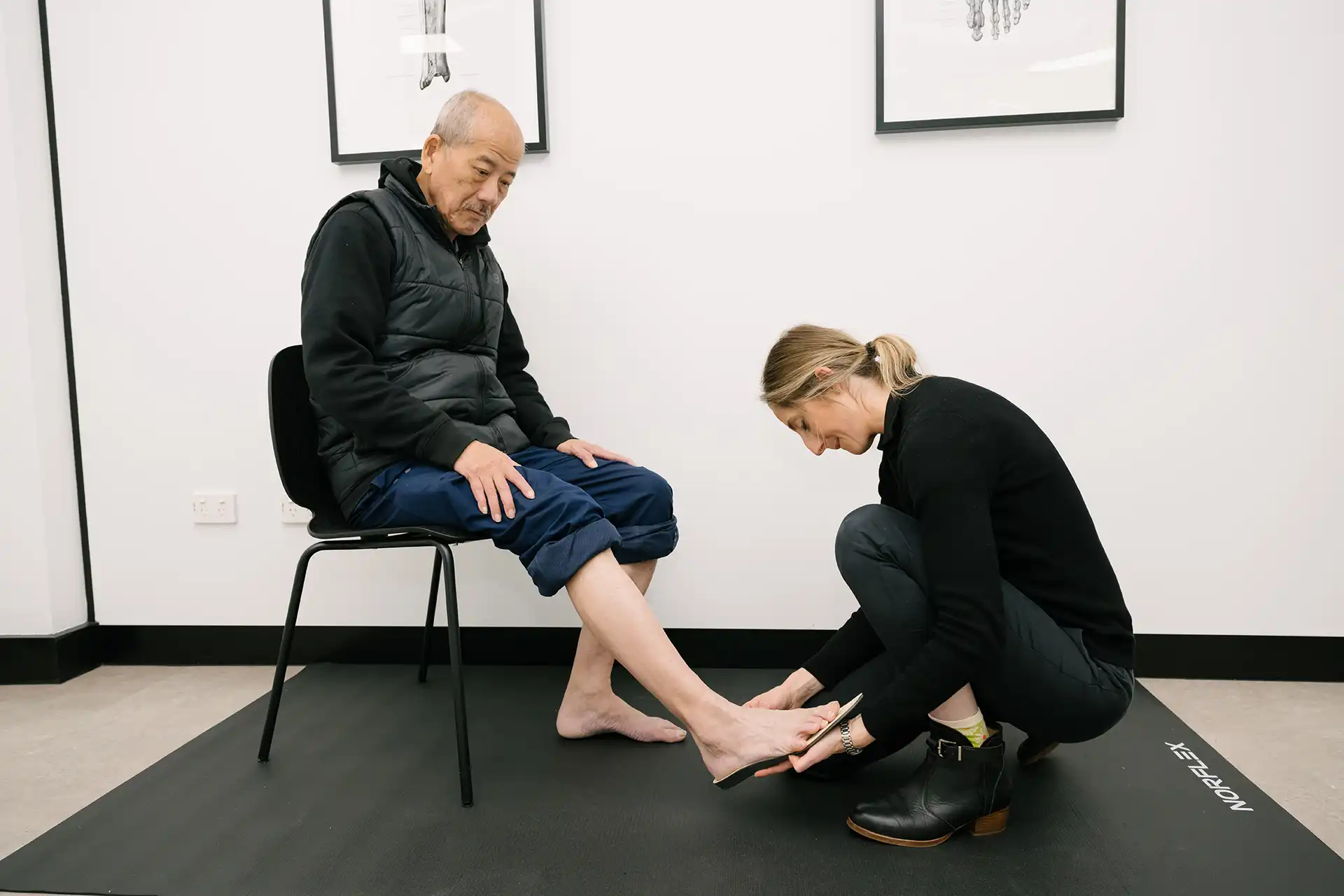
If you’ve ever experienced heel pain, aching arches, sore feet after standing all day or ongoing foot discomfort, you’ve probably heard someone mention orthotics. But with so many different types available, it can be difficult to know which option is right for you.
Should you invest in custom orthotics? Or will a prefabricated device do the job?
The answer isn’t always as straightforward as choosing the most expensive option. At our clinic, we believe the best orthotic is the one that matches your feet, your lifestyle, and your condition. So let’s explore the differences.
What Are Orthotics?
Orthotics are specially designed devices that fit inside your shoes to improve the way your feet function.
Rather than simply cushioning your feet, orthotics help improve your biomechanics (the way your feet move) when you walk, run or stand. Depending on your needs, they can be designed to:
- Support the foot
- Improve stability
- Reduce excessive movement
- Restrict certain motions
- Increase movement where needed
- Redistribute pressure away from painful areas
Orthotics are used to treat a wide range of conditions and can benefit people of all ages, from growing children to active adults and older individuals.
The two main categories of orthotics are prefabricated orthotics and custom foot orthotics.
Prefabricated Orthotics
Prefabricated orthotics are ready made devices that come in standard sizes, much like shoes (extra small through to extra large). While they aren’t made specifically for one person’s feet, they are designed using common foot shapes and can provide excellent support when correctly fitted.
It’s important not to confuse quality prefabricated orthotics supplied by a podiatrist with the inexpensive gel or foam inserts often found at supermarkets or pharmacies. Although they may look similar, professionally selected prefabricated orthotics are typically made from higher quality materials, provide better support, and last significantly longer.
These devices are commonly used to help manage:
- Plantar fasciitis
- Heel pain
- Arch pain
- Mild overpronation
- General foot fatigue
In fact, many patients achieve excellent results with prefabricated orthotics alone.
Advantages of Prefabricated Orthotics
Cost-Effective
One of the biggest advantages is affordability. Prefabricated orthotics are considerably less expensive than custom made devices, making them a great first option for many patients.
Immediate Relief
Because they’re already manufactured, there’s no waiting period. Once fitted by your podiatrist, they can usually be taken home and used straight away.
Can Be Modified
Many people are surprised to learn that prefabricated orthotics aren’t always “one size fits all.”
A podiatrist can often customise them by adding:
- Heel raises
- Wedges
- Metatarsal domes
- Additional padding
These modifications allow us to better match your individual foot mechanics while keeping costs lower than a fully custom device.
Great Starting Point
For many patients, prefabricated orthotics are an excellent first step.
If your symptoms improve significantly, you may not need custom devices. If they don’t provide enough correction or support, your podiatrist can then determine whether custom orthotics are the next best option.
Are There Any Downsides?
Although prefabricated orthotics work very well for many people, they do have some limitations.
Because they come in standard sizes rather than being made specifically for your feet, they cannot accommodate every foot shape or complex biomechanical issue.
People with significant structural deformities, severe foot pain or complex movement patterns may require a more personalised solution.
Custom Foot Orthotics
Custom foot orthotics are prescribed medical devices individually designed and tailored to your feet.
They are created after a comprehensive biomechanical assessment is performed by your podiatrist. This assessment looks at how your feet function while standing and walking, your range of movement, muscle strength, footwear, activity levels, and any medical conditions that may affect your feet.
A detailed 3D scan of your feet is then used to manufacture orthotics that match your unique foot shape.
Rather than simply supporting the foot, custom orthotics are designed to influence how your feet move during every step you take.
Advantages of Custom Orthotics
Designed Specifically for You
Every person’s feet are different.
Custom orthotics are made to match the exact contours of your feet, providing support exactly where your body needs it.
Improved Biomechanical Control
Unlike standard inserts, custom orthotics can actively influence the way your foot functions.
Your podiatrist can prescribe features in the devices such as:
- Rearfoot posting
- Forefoot wedges
- Heel lifts
- Specific arch profiles
- Offloading modifications
These adjustments help improve alignment, reduce abnormal forces, and improve overall foot function.
Precise Pressure Redistribution
For patients with diabetes, painful corns, calluses, prominent bones, arthritis, or pressure sensitive areas, custom orthotics can be designed to remove pressure from these vulnerable spots.
This can reduce pain and, in some cases, help prevent skin breakdown and ulceration.
Excellent for Long-Term or Complex Conditions
Custom orthotics are often recommended for:
- Chronic plantar fasciitis
- Severe overpronation
- Tendon injuries
- Arthritis
- Structural foot deformities
- Recurrent sports injuries
- Persistent pain that hasn’t improved with prefabricated devices
Built to Last
Custom orthotics are generally manufactured using durable medical-grade materials designed to maintain their shape for many years.
While the top covers may eventually require replacement, the orthotic itself often lasts significantly longer than prefabricated alternatives.
Are There Any Disadvantages?
The biggest consideration is the initial investment.
Because custom orthotics require:
- A comprehensive biomechanical assessment
- Digital scanning
- Individual prescription
- Laboratory manufacturing
They also take time to manufacture, meaning you won’t usually receive them on the day of your appointment.
However, for patients with ongoing pain or complex foot mechanics, the long-term benefits often outweigh the upfront cost.
So… Which Option Is Best?
This is one of the most common questions we hear in clinic.
The truth is that there is no universal “best” orthotic.
The right choice depends on several factors, including:
- Your diagnosis
- The severity of your symptoms
- Your foot structure
- Your activity levels
- Your occupation
- Your footwear
- Your goals
- Your budget
For many people experiencing their first episode of heel pain or arch discomfort, a high quality prefabricated orthotic is an excellent starting point.
If your pain is ongoing, you’ve already tried other treatments without success, or your foot mechanics require more precise correction, custom orthotics may provide better long-term outcomes.
The Importance of a Proper Assessment
Orthotics are not simply inserts you place in your shoes they are medical devices designed to change how your feet function.
Choosing the wrong device can sometimes provide little benefit or even worsen symptoms.
That’s why a thorough assessment by a podiatrist is so important. By understanding your individual foot mechanics, lifestyle, and goals, we can recommend the option most likely to provide lasting relief.
Final Thoughts
Whether you need a quality prefabricated orthotic or a fully customised prescribed device, the goal is always the same: to reduce pain, improve function, and keep you moving comfortably.
At our clinic, we don’t believe every patient needs custom orthotics. We believe every patient deserves the right treatment for their individual needs.
Sometimes that’s a professionally fitted prefabricated device. Sometimes it’s a custom-made orthotic. The key is making an informed decision based on expert assessment not guesswork.
If you’re experiencing persistent foot, heel, or arch pain, book an appointment with one of our podiatrists. We’ll assess your feet, explain your options, and help you find the orthotic solution that’s right for you.